Entry 01 Side by side
Two technologies, two kinds of failure
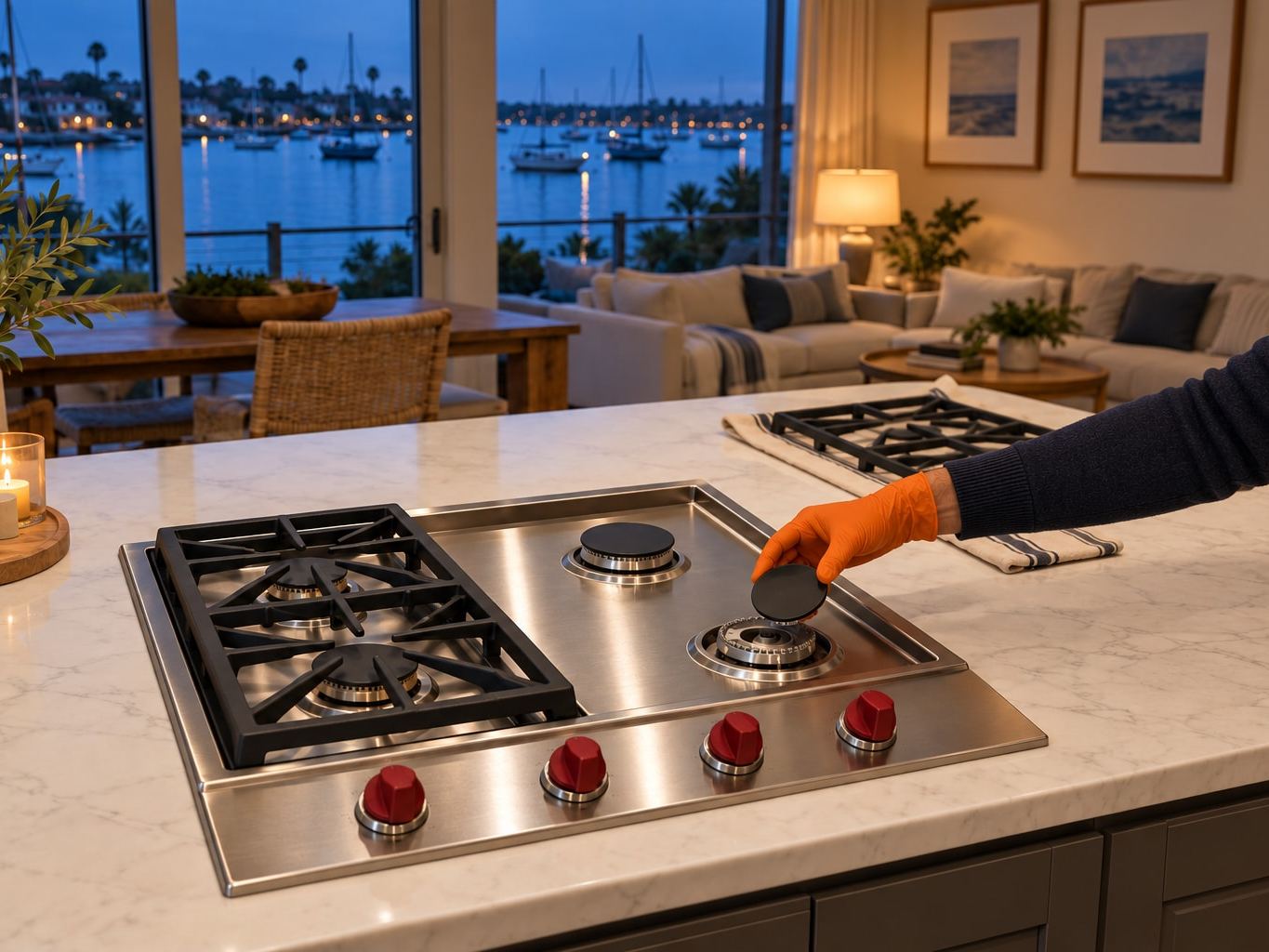
Rangetops count as gas: identical burner hardware, mounted flush with the counter edge, and on some models a griddle plate or charbroiler section beside the burners.
Option A
Gas cooktops and rangetops
- Faults sit in the spark, the flame and the gas path
- Owners notice clicking, burners that won't light, ragged or yellow flames
- Parts involved: caps, burner bases, electrodes, spark module, valves and switches
- Spills and cleaning water are frequent triggers
- A smell of gas means an emergency, not a service call
Option B
Induction cooktops
- Faults sit in pan detection, power delivery and electronics
- Owners notice zones that won't start, blink, cut out or show a message
- Parts involved: power boards, cooling fan, temperature sensors, touch controls
- Heat building up under the glass is a frequent trigger
- Cracked glass over a zone is a reason to stop using it
Entry noteTell the dispatcher which type sits in your counter; it sets the technician's starting point.
Gas smell: get out first
Odor of gas? Walk out, then dial
Stop cooking and keep your hands away from knobs, igniters, wall switches and the shut-off under the counter. Don't search for where it's coming from. Leave the house, bring everybody along, and from the street outside dial the gas company or 911. We fix the cooktop once they've given the all-clear.